My team has learned to survive 43 new ideas before 9am on a Monday.
They deserve more credit than I give them.
I was diagnosed with severe adult ADHD in 2019. It took me another five years to properly understand what that means for the people who work with me every day.
The daily reality of leading with ADHD
Here’s what my team manages:
The interruption that feels urgent to me but derails their entire morning. The “quick question” that becomes a 40-minute strategy session. The pivot that makes perfect sense in my head but lands like whiplash for someone mid-execution. The thinking out loud that sounds like a decision but was actually just processing.
They’ve learned the wiring now.
Tiaan knows that my third idea is usually the one worth exploring. He’s developed a patient approach where he listens to the first two, asks probing questions, and waits for the pattern to emerge. By idea three, we’ve usually found something worth pursuing.
Zelna has developed a gentle “we agreed last week to focus on X” that brings me back without friction. She doesn’t argue. She doesn’t express frustration. She simply anchors me to prior commitments with calm clarity. It works every time.
The team has a signal for “he’s three tangents deep, someone reel him in.” I don’t know exactly what it is. I suspect it involves eye contact and subtle head movements. But I’ve noticed the pattern: when I’m spiralling through interconnected ideas, someone gently brings us back to the agenda.
The research confirms what my team figured out through experience
Johan Wiklund has studied ADHD entrepreneurs for a decade. His research confirms what my team figured out through experience: hyperactivity drives entrepreneurial vision, but inattention undermines execution.
The combination creates a specific leadership challenge. The same cognitive pattern that generates creative connections and sees opportunities others miss also creates execution chaos. The founder’s superpower is also their team’s greatest burden.
Wiklund’s work reveals that ADHD entrepreneurs often succeed not despite their neurology but because of it. The pattern recognition, the comfort with risk, the ability to hyperfocus on interesting problems—all contribute to business creation. But sustainable growth requires translating that chaotic creativity into consistent delivery.
The solution isn’t fixing the CEO. It’s building a team that knows how to translate chaos into delivery.
What effective ADHD leadership accommodation looks like
My team has developed specific strategies for working with my cognitive pattern. None of these were taught. All of them were learned through trial and error.
They’ve learned to distinguish between processing and deciding. When I say “what if we tried X,” they don’t immediately spring into action. They’ve learned to ask clarifying questions: “Is this something you want us to explore, or are you thinking out loud?” That simple question has prevented countless wasted hours.
They’ve built buffers around my scheduled meetings. My calendar looks normal, but my team knows that any meeting I’m in will likely run 15 minutes over. They’ve quietly adjusted their own schedules to accommodate this pattern without me asking.
They’ve created systems that don’t depend on my attention. The operations that need consistency run independently of my involvement. Zelna has built processes that continue whether or not I’m paying attention. The things that require my input have structured triggers that ensure I don’t drop balls.
They’ve learned to capture decisions in writing. Verbal agreements with me are unreliable. Not because I’m dishonest, but because my memory prioritises interesting ideas over commitments. My team has learned to follow up important conversations with written summaries. “Just to confirm: we agreed to X, Y, and Z.” Those follow-up messages have saved us countless misunderstandings.
The guilt of knowing what you put people through
I used to think my job was having the ideas. I’ve learned my job is also not drowning the people who have to implement them.
That’s a harder lesson than it sounds.
When you’re the founder, you’re surrounded by people who’ve chosen to work with you. They’ve signed up for your vision, your energy, your ambition. What they didn’t sign up for was managing your cognitive challenges so thoroughly that it becomes a significant part of their role.
There’s guilt in that recognition. Real guilt.
I watch my team navigate my inconsistency with grace. I see the patience required to redirect me without triggering defensiveness. I notice the energy they spend translating my chaotic inputs into coherent outputs. And I don’t acknowledge it enough.
To Malan, Tiaan, Zelna, Wimpie, and the rest of the team: thank you for learning my brain. Thank you for managing it with patience and occasional eye-rolls. I see it. I don’t say it enough.
The broader lesson for neurodivergent leadership
This isn’t just about ADHD. Every leader has patterns that their team learns to manage. The specific pattern varies, but the dynamic is universal.
Some leaders think in systems and struggle with emotional nuance. Their teams learn to translate data requests into human terms.
Some leaders are conflict-avoidant. Their teams learn to surface difficult issues in ways that don’t trigger shutdown.
Some leaders hyperfocus on problems and miss celebrating wins. Their teams learn to create space for acknowledgment even when the leader forgets.
The question isn’t whether your team manages your patterns. They do. The question is whether you know what they’re managing and whether you’ve properly acknowledged the burden.
What this means for building leadership teams
If you’re leading with ADHD or other neurodivergent patterns, the composition of your leadership team matters more than standard hiring frameworks suggest.
Hire for complementary strengths, not similarity. The last thing I need is another me. What I need are people whose natural strengths cover my natural gaps. Zelna’s operational consistency balances my strategic chaos. Tiaan’s analytical depth balances my intuitive leaps. The team works because the pieces fit together, not because we’re alike.
Be explicit about what you need. For years, I expected my team to figure out how to work with me through observation. That’s unfair. I’ve learned to be more direct: “I’m going to generate a lot of ideas in this session. Please don’t act on any of them until we’ve had a chance to filter.” Explicit guidance reduces the cognitive load on your team.
Build accountability systems that don’t depend on you remembering. If a commitment requires my memory to survive, it’s unreliable. The systems that work in our organisation have built-in triggers, documented decisions, and clear ownership that doesn’t require my attention to persist.
Create permission for pushback. My team has learned to redirect me, but that learning came at a cost. Some people left before figuring out that pushback was acceptable. Now I explicitly tell new team members: “Part of your job is telling me when I’m wrong. I won’t always like it in the moment, but I need it.”
The daily practice of neurodivergent leadership
Managing ADHD in a leadership role isn’t a one-time accommodation. It’s a daily practice.
Some mornings, the ideas flow so fast that I could derail my entire team’s week in an hour. Those mornings require extra discipline. I’ve learned to write ideas down instead of sharing them immediately. I’ve learned to schedule “idea processing” time rather than ambushing people with unfiltered thoughts.
Some days, my hyperfocus lands on exactly the right problem, and I produce work that would have taken others weeks. Those days are the reason the pattern works at all. The challenge is that I can’t predict when they’ll happen.
The practice is accepting both realities. The chaos and the brilliance come from the same source. Building a sustainable organisation means creating structures that capture the brilliance while containing the chaos.
What has your team learned to manage about you?
I’m curious about patterns you may not have acknowledged.
What accommodations has your team made without you asking? What aspects of your leadership style require them to adapt in ways you’ve never discussed? What would they tell you if you asked?
These questions matter because acknowledgment matters. The people who work with us deserve to know that we see what they do. The adaptations they make, the patience they show, the translation work they perform between our vision and actual execution.
That recognition doesn’t require you to change who you are. It requires you to see clearly what working with you actually demands.
And then to say thank you. More often than you do.
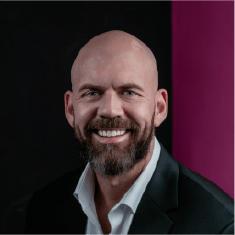
Written by
Dieter Herbst
CEO & Founder at Herbst Group. Working with pharmaceutical commercial leaders across South Africa, Kenya, and Brazil to transform sales force effectiveness through evidence-based approaches.
Connect on LinkedIn